Why Everyone is Buying the Homepod 2Nd Generation (Full Review)
Category: Audio
Introduction — My months with the HomePod 2nd Generation
I've been using the HomePod 2nd Generation as my primary home speaker for several months. I bought it because I wanted a single, high-quality speaker that would live in my living room, handle everything from background music to podcasts to voice control, and also play nicely with the rest of the smart devices in my home. What I found was a product that excels in sound and ecosystem integration, but also one with a few trade-offs that mattered in daily life.
In this long-form review I’ll share exactly how it performed in my home: setup, sound, smart features, things that surprised me, and the annoyances I ran into. I’ll also include a comparison to other popular speakers and a buying guide so you can decide if it’s right for you.
Design and build: understated, heavy, and premium
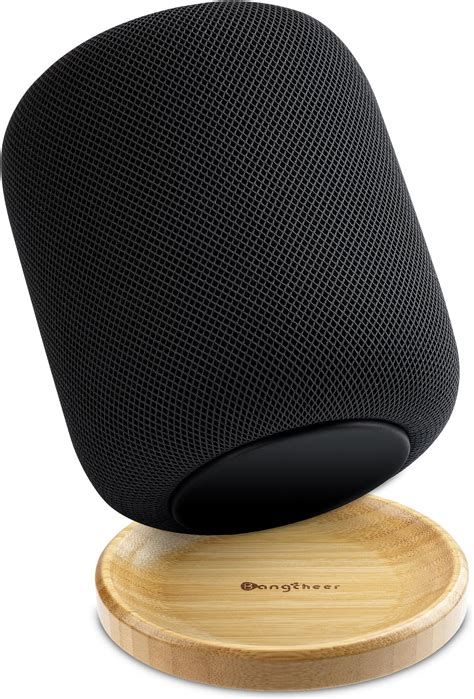
Right away I noticed the HomePod’s presence. It's heavier and denser than it looks in photos. The fabric mesh and matte top give it a premium feel that matches my other Apple devices. I appreciated the tactile, low-profile top surface for playback controls — it's responsive and elegant.
One thing I appreciated was the finish options: the neutral colors fit my living room setup without drawing unnecessary attention. One thing that bothered me was the footprint — it takes up more surface area than the smaller smart speakers I’ve owned. If you have limited shelf space, you’ll want to measure before committing.
Setup and day-to-day integration
Setup was nearly painless. I unboxed it, held my iPhone nearby, and the Home app walked me through the process. It discovered my Wi-Fi and my Apple ID environment quickly, and in under ten minutes it was ready to play music. I appreciated the clear on-screen prompts during setup and the way it automatically appeared in Apple Music and Home settings.
In my experience the HomePod feels most "at home" in an Apple-centric household. Handoff works smoothly — when I walked into the room with music playing on my phone, the HomePod offered to continue playback. I use several HomeKit accessories and the HomePod doubled as a home hub, which made automations more reliable for me.
Thread and smart home usefulness
I noticed that the HomePod also acts as a smart home bridge for Thread devices (I added a few Thread-enabled sensors and lights). In practice that meant more responsive automations rather than large, sporadic delays. If you have a mix of Zigbee and Thread devices, the HomePod strengthened the Thread network in my house. That said, if you’re not into smart home gear, those features are “nice to have” rather than essential.
Sound quality — the heart of the experience
Sound is the main reason I kept the HomePod. After testing it with a variety of material — acoustic guitar tracks, complex orchestral pieces, bass-heavy electronic songs, spoken-word podcasts — I was consistently impressed by its tuning. Vocals are forward and clear without being harsh, and there’s a surprising amount of bass for a single enclosure.
What I liked most was the way the HomePod adapts to placement. I set it on a side table against a wall and the room-sensing feature adjusted the EQ so that mids and highs stayed detailed while the bass still felt solid. In my experience, this adaptive tuning made the HomePod sound fuller than other speakers of a similar size in the same room.
Find top-rated Audio & Headphones products at great prices.
View Offers →I also paired two HomePods for stereo and noticed a pronounced improvement in soundstage and separation. The difference is more than just louder — instruments sit in separate spaces and you can follow transients between left and right channels with clarity. For movies and multi-speaker music mixes, that stereo pairing made the listening experience feel cinematic.
Where it surprised me
I was surprised by how the HomePod handled tricky tracks with dense low-frequency energy. On some speakers that kind of music can sound muddy; the HomePod separated the sub-bass from the midrange so vocals and guitars remained intelligible. I also found that at low to moderate listening levels it retained detail that other speakers lose unless you push them loud.
Where it disappointed me
One disappointment: while bass is impressive for the size, it doesn't replace a dedicated subwoofer for large rooms or serious home theater use. If you love chest-thumping bass at club levels, you’ll want an external sub or a multi-speaker setup. I also noticed that at extremely high volumes the HomePod can sound strained on very bright, trebly tracks — it’s a small quibble, but worth noting for audiophiles.
Smart assistant and voice control — Siri on the HomePod
I use Siri on the HomePod for everyday tasks: timers in the kitchen, controlling lights, adding items to reminders, and querying quick facts. In my experience Siri is reliable for HomeKit and music commands. For example, I can say, "Hey Siri, play something mellow," and it will pick an appropriate playlist from my library or Apple Music preferences.
However, Siri is still not as flexible as some other voice assistants when it comes to complex web searches or third-party services. I often noticed that asking for news or non-Apple streaming content required extra work — sometimes the simplest approach was to AirPlay from my phone instead.
Another practical annoyance: voice recognition can be imperfect when multiple people are talking or when there's background noise. While the HomePod can recognize voices tied to Apple IDs, it occasionally misattributed a command and pulled my partner’s music preferences instead of mine.
Streaming and app compatibility
Apple Music is the HomePod’s best companion. In my experience it responded instantly to library requests and integrated with playlists and spatial audio very well. If you primarily use Apple services, the HomePod gives you the most seamless experience.
For third-party services — I mainly tested Spotify and a few podcast apps — I found limitations. Direct Spotify control via voice isn't as smooth; I often had to use my phone to start playback or rely on AirPlay. That friction was one of the clearest trade-offs I encountered: a near-perfect experience if you live in Apple's ecosystem, and a somewhat more manual one if you don't.
Reliability, updates, and longevity
Over several months I got a couple of software updates that improved stability and occasionally added small features. The device felt supported. I also noticed that it rarely dropped connections or needed reboots; uptime has been solid.
Find top-rated Audio & Headphones products at great prices.
View Offers →From a longevity perspective, the premium build and Apple's history of software support make me optimistic the HomePod will remain usable for years. That said, its value depends heavily on how Apple evolves Siri and third-party integrations going forward.
Pros & Cons
- Pros:
- Outstanding sound for a single speaker — rich bass, clear mids, and adaptive tuning.
- Smooth integration with Apple ecosystem (Handoff, HomeKit, Apple Music).
- Acts as a home hub and Thread border router for smarter automations.
- Premium design and build quality that fits most living spaces.
- Stereo pairing yields a markedly better soundstage for music and movies.
- Cons:
- Best experience is limited to Apple services; third-party streaming control can be clunky.
- Larger footprint than tiny smart speakers — needs space.
- Siri can still be less capable than some competitors for general knowledge queries.
- At very high volumes, some tracks can sound a touch strained.
- Price is higher than many compact speakers that offer adequate sound for casual listeners.
Comparison: HomePod 2nd Gen vs HomePod Mini vs Sonos One
I put together a quick comparison table based on my hands-on time with each. This is meant to help you weigh the HomePod 2nd Gen against a smaller, cheaper Apple option and a strong non-Apple competitor.
| Feature | HomePod 2nd Gen | HomePod Mini | Sonos One |
|---|---|---|---|
| Sound | Fuller, deeper bass and wider soundstage — very good for music in medium rooms | Surprisingly good for size, but lacks deep bass and breadth | Warm, balanced sound with third-party streaming support — great midrange |
| Smart Assistant | Siri (best with Apple Music and HomeKit) | Siri (great for smart home basics) | Supports Alexa and Google Assistant — more flexible voice integrations |
| Smart Home | HomeKit hub + Thread support | HomeKit hub + Thread (smaller network impact) | Works with a range of ecosystems; no native Thread border router |
| Third-party streaming | Best with Apple Music; limited native control for some services | Same as HomePod 2 — optimal with Apple services | Native, native support for many services and multi-room Sonos ecosystem |
| Price/value | Higher price but premium sound and features | Budget-friendly; great value for Apple users | Competitive pricing; excellent value for multi-room and cross-platform users |
| Best for | Apple-focused users who prioritize sound quality | Small rooms and users on a budget who want Apple integration | Users who want broad streaming support and multi-room Sonos ecosystem |
Buying guide — who should buy the HomePod 2nd Gen?
If you’re considering the HomePod 2nd Gen, here’s how I’d advise you based on months of real use.
Choose the HomePod if:
- You use Apple Music and own several Apple devices — your experience will be the smoothest and most feature-rich.
- You want a single, high-quality speaker for a living room or bedroom and appreciate adaptive tuning and neutral design.
- You’re building a HomeKit-centric smart home and want a reliable home hub that also helps Thread devices perform better.
- You care about stereo pairing and want a simpler two-speaker setup rather than a multi-vendor system.
Consider alternatives if:
- You rely heavily on non-Apple streaming services and want native voice control for those services — consider Sonos or a speaker with Alexa/Google built in.
- You need a portable, battery-powered speaker — HomePod is not portable and requires constant power.
- You want extreme low-frequency performance in a large room — you’ll likely want a dedicated subwoofer.
- You have very limited shelf space — the HomePod is larger than ultra-compact smart speakers.
Placement and setup tips I learned
- Give the HomePod some breathing room: avoid cramming it into a narrow cubby if possible; a few inches from a wall was fine in my living room.
- Avoid placing it on an enclosed shelf; open placement helps the adaptive EQ do its job.
- If you pair two, put them at ear height and roughly equidistant from your listening position for the best stereo image.
- Keep it plugged into a stable power outlet — I had one temporary glitch when the outlet was on a circuit with a lot of load balancing.
Price and value considerations
I weighed the cost against other speakers and concluded the HomePod offers good value if you factor in build quality, sound performance, and the way it simplifies an Apple-centric home. If you’re cross-platform or price-sensitive, there are cheaper options that will meet basic needs better. For me, the decision came down to whether I wanted a “speaker that integrates” or a “speaker that just plays.” The HomePod delivers the former exceptionally well.
Final thoughts and conclusion
After using the HomePod 2nd Generation for several months, I can say it earned a permanent spot in my living room. I found its core strengths — sound quality, adaptive tuning, and deep Apple integration — to be meaningful improvements over cheaper smart speakers. Stereo pairing transformed music playback in ways I didn’t expect, and the device’s role as a smart home hub became more valuable the more smart devices I added.
That said, it’s not perfect. Siri’s limitations outside the Apple ecosystem, the occasional voice-recognition hiccup, and the need for a larger footprint are honest trade-offs to consider. If you’re heavily invested in Apple services and prioritize sound quality over price, the HomePod 2nd Gen is an excellent choice in my experience. If you want broad third-party streaming voice control or a budget solution, you might be happier exploring other options.
Ultimately, the reason “everyone” seems to be buying the HomePod 2nd Generation (or at least why it’s become a very popular choice in Apple households) is simple: it reliably combines great sound with seamless integration. For me, that combination justified the purchase and made it a daily part of how I listen, control my home, and enjoy audio content.